
Choosing a manufacturing process is rarely a single fork between "machining" and "not machining." It is a sequence of questions about the part — what it must do, how precisely, in what material, in what quantity — and the answers point to different routes. The danger is answering those questions with a habit instead of with the drawing, comparing routes at different quality levels, or pricing only the first step of a route that actually contains three.
The framework that survives contact with real parts is a set of five questions. Each question removes some routes and sharpens the comparison of the ones that remain. Worked in order, they produce a short list and a landed-cost model rather than an argument. This article runs the questions one by one, using custom CNC machining as the reference route because it is the most flexible starting point.
1. What is the part actually required to do?
Function comes before process, because function decides which requirements are real and which are decoration. A part that locates two components carries positional tolerances that rule out loose processes. A part that seals carries surface requirements that decide whether a finish step is needed in any route. A part that carries load in a fatigue environment inherits material structure requirements — grain orientation, porosity, residual stress — that some processes cannot meet at all.
Write the functional requirements next to the process candidates before comparing price. The drawing states dimensions and tolerances; the application notes state why they exist. A machined bracket and a printed bracket may share an envelope but differ completely in fatigue behavior, and the difference only appears in the function. Buyers who compare routes without the function note are comparing shapes instead of parts.
Function also sets the evidence the part must carry. A safety-critical part needs material certificates, dimensional reports, and process control that a cosmetic part does not. Machining from wrought stock with a certificate supports that evidence chain naturally; a casting or printed blank needs its own material verification to stand in the same file. The evidence requirement is a process requirement, and it filters the route list early.
2. Which tolerances and finishes does the design actually demand?
Tolerance is the second filter, because every process has a practical envelope and the envelope is looser than most buyers assume. As-cast and as-printed parts hold moderate features at best; forging holds its die faces but not its machined details; forming holds the sheet geometry but not tight holes. Machining holds the tightest envelope of the common routes — milling and turning at ±0.003 mm, grinding at ±0.002 mm, with capability targets such as Ppk ≥ 1.67 at the initial study on key characteristics and Cpk ≥ 1.33 on general characteristics. Capability is reported per characteristic: every report names the feature, its tolerance band, the sample size, the sigma method, and the study window.
Read the tolerance map before choosing, not after. A part whose critical features sit inside the loose envelope of casting or printing may be producible as-formed with no cutting at all. A part whose critical features sit in the machining envelope will need cutting in almost any route, which means a cast or forged blank is only the first step of a longer chain that ends at a machine. Comparing a finished machined part with an unfinished blank is the classic pricing error.
The finish callouts matter the same way. A sealing surface, a bearing seat, or a wear face carries a finish that as-cast and as-printed surfaces cannot deliver, so the route must include a finishing operation wherever those features exist. The honest comparison is therefore route-plus-finishing against machining, with both sides held to the same drawing. The quality practice that verifies the finished features is documented on the quality page.
3. What does tooling economics say at the planned quantity?
Quantity is where the comparison becomes arithmetic. Machining carries no tooling charge beyond programming and setup, so its per-part cost is roughly flat from one piece to a thousand. Casting, forging, and forming each carry a tooling investment — a die, a mold, or a pattern — that must be amortized over the run, and the per-part price only falls once that investment is spread. The crossover between the routes is set by the tooling cost divided by the per-part saving, not by a universal volume threshold.
The crossover depends on the part. A small, thin-walled housing may cross over to die casting at a few thousand pieces because the casting needs little finishing. A large part that still requires machining on most surfaces may never cross over, because the blank saves little against the cutting it still needs. Model the total — tooling amortized over your lifetime quantity, blank or stock cost, machining, finishing, inspection, freight — and the arithmetic replaces the argument.
Tooling also changes the risk of design change. A machining program is a file; a die or mold is a physical investment that changes cost money and time. For a design still in motion, machining keeps the door open; for a frozen design at volume, tooling amortizes. The quantity forecast should be honest here, because a design that changes after the die is cut has paid for the tooling twice — once to build it and once to revise it.
4. Does the material structure need to survive the route?
Material is not an interchangeable input to the process comparison; it is partly created by the process. Machining starts from the wrought grade and condition named on the drawing, with the mill's certificate and the structure the mill produced. Casting remelts the alloy and creates a new structure with its own porosity and grain; printing builds a layered structure with its own anisotropy; forging reorients the grain along the part's load paths. The same alloy is not the same material in every route.
Where the material is a functional element, the structure decides the route. A load-bearing component specified as a forging is rarely replaceable by a machined part from bar, because the grain orientation is the point. A component whose drawing names a wrought grade for its properties is served directly by machining from that grade. A printed part carries a structure that must be validated for the application — often through heat treatment and process qualification — before it stands in the same file.
Traceability follows the same logic. A machined part inherits the mill certificate of its bar or plate, tying the part to a heat and a chemical composition. A casting carries the foundry's own melt records; a printed part carries the powder lot and build records. For regulated buyers, the certificate chain is part of the route decision, and the grade naming conventions shown on the parts page reflect that discipline.
5. What hidden second processes ride along with each route?
Every alternative to machining arrives with a second act that the headline quote often hides. A cast part needs pattern or die tooling and usually trimming, gate removal, and machining of its envelope. A forging needs its dies, its flash trimmed, and its critical faces machined. A printed part needs support removal, heat treatment, and machining of its functional surfaces. Each hidden step carries cost, lead time, and another supplier to manage.
The hidden steps matter most when they overlap with what machining would have done anyway. If a casting's envelope still has to be machined to hold the datum structure, the buyer is paying for the casting and the machining, and the saving is only in the material removed. If a printed part's sealing faces must be cut regardless, printing has added a process to arrive at a surface machining could produce directly. The comparison should price the chain, not the first invoice.
There are honest exceptions, and they define where alternatives genuinely win. Casting wins at volume with thin-walled geometry that needs little finishing. Forging wins where grain structure is a specification. Printing wins where the geometry cannot be machined at all. In each case the buyer should verify the second act is small — the casting truly net-shape, the forging truly final on its critical faces, the printed part truly functional as-built — before committing to the route.
6. How does the tolerance band behave at the functional surfaces?
Where tolerances genuinely matter, machining tends to appear at the end of any route. Consider a housing that is die-cast at volume: the datum faces, the bore, and the sealing surface still need a machining pass, because the as-cast envelope cannot hold them. The route is casting plus machining, and the unit cost that matters is the sum. Buyers who compare only the casting quote against a fully machined part are comparing half a route with a whole one.
The same logic applies in reverse. A part that starts as a machined block but needs an internal cavity no cutter can reach becomes a machining plus printing or plus casting route, and the comparison flips. The discipline is to draw the full route for each candidate — every operation, every hand-off, every inspection — and price that, rather than pricing the process that happens to be named in the first quote.
The capability bands that make machining the finishing step of so many routes are the ones this shop holds and verifies: ±0.003 mm in milling and turning, ±0.002 mm in grinding, and process capability on the characteristics that matter. Those bands are the practical definition of "functional," and any route that must meet them inherits a machining step. The services overview describes the machine base that carries those bands.
7. How should the landed-cost model be built?
When the route list is short, build the model that settles it. Start with the lifetime quantity you will actually buy, not the quantity on the current PO. For each route, add the tooling or programming cost amortized over that quantity, the unit cost at the quantity, and the cost of every second process the route carries. Add inspection and certification at the level the application demands, packaging, and freight at the same incoterm. The route that wins the lifetime model is the route to quote in detail.
Lead time belongs in the model as a cost. Tooling routes carry a front-end delay for the die or mold, printing carries a build and qualification cycle, and machining carries programming and first-article time. If the part is needed before the tooling can exist, the route that can start this week wins regardless of the per-unit arithmetic. The schedule cost of a route is as real as its tooling cost, and it decides more programs than it is credited for.
The risk of design change is the last line of the model. A part likely to change rewards a route with no tooling commitment and a fast restart; a part frozen for years rewards tooling amortization. Buyers who add this line make different decisions from those who compare only unit prices, and the difference compounds across every order the part generates. A comparison done honestly at this level is worth more than any process slogan.
8. Which parts should stay machined, and which should switch?
Run the five questions and the answer becomes a rule rather than a preference. A part stays on the machine when its tolerances sit in the machining envelope, when its material must be the wrought grade with a certificate, when its quantity is too small to amortize tooling, when its design is still moving, or when the alternative's second process would add machining anyway. Those conditions describe most early-production and low-volume custom parts.
A part switches when one of the alternatives removes a real cost. The honest switchers are high-volume thin-walled housings that go to die casting, load-bearing parts specified as forgings for grain structure, geometries that no cutter can reach and go to printing, and high-volume sheet forms that go to forming. In each case the switch survives the five questions — the tolerance envelope allows it, the material structure is acceptable, and the second processes are genuinely small.
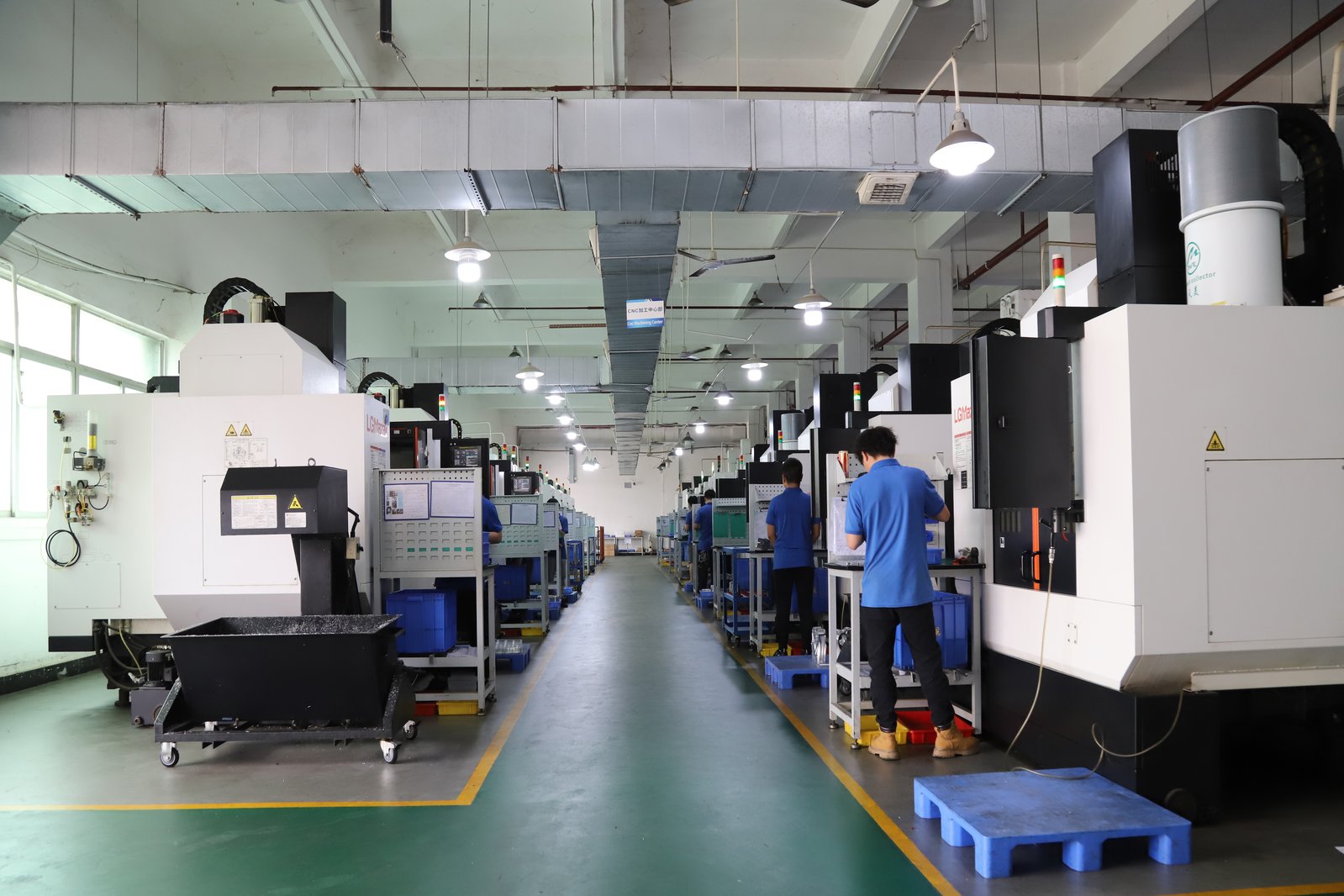
The factory behind this site, documented on the factory page, produces the machined end of this spectrum, and its process engineers are equally practiced at saying when another route would serve the part better. A supplier that quotes machining when machining is right, and says so plainly when it is not, is the kind of partner the five-question route map is designed to find. The map works because it asks the part what it needs before asking the supplier what it sells.
The buyer's rule of thumb: ask the part five questions — function, tolerance, quantity, material structure, and hidden second processes — before asking any supplier for a price. The route that survives the questions and wins the landed-cost model is the route to quote.
Frequently Asked Questions
When does a part belong on the CNC machine rather than on another process?
When its requirements are best met by cutting from solid stock: a tight tolerance that another process cannot hold, a wrought material grade that must be traceable, a small or uncertain quantity where tooling amortization fails, or a design that is still moving. Machining quotes one price for one piece and the same per-part price at a thousand, which suits early and low-volume production.
What is the cheapest route for a high-volume custom part?
Whatever route produces the part at the required tolerance with the least finishing. A small die-cast housing can undercut machining at volume because the die cost spreads thin; a forging wins where grain structure matters; but a casting or forging that still needs every face machined rarely beats machining outright. Model tooling plus blank plus finishing over your lifetime quantity before choosing.
When is metal 3D printing the right process?
When the geometry genuinely cannot be cut — internal conformal channels, lattices, organic housings, or assemblies printed as one piece. For ordinary brackets and housings, printed metal usually costs more per part, carries a different microstructure from wrought stock, and still needs machining on functional surfaces, so it loses to machining unless the geometry justifies it.
Why does material grade matter in the process comparison?
Because the process changes what the material is. Machining starts from the exact wrought grade and condition on the drawing, with a mill certificate; casting and printing create a new structure from the raw alloy; forging reorients the grain. When the drawing's material is a functional requirement rather than a suggestion, the process that preserves the specified grade has a structural advantage.
How do tolerances decide between processes?
Every process has a practical envelope. Casting and printing hold loose-to-moderate features as-formed; forging needs machining on its critical faces; machining holds ±0.003 mm in milling and turning and ±0.002 mm in grinding. A part with critical features at those bands will need cutting in almost any route, so the comparison should include the finish-machining step.
What hidden second processes appear in non-machined routes?
Casting adds pattern or die tooling, and often trimming and machining of its envelope; forging adds dies, flash removal, and finish machining; printing adds support removal, heat treatment, and machining of functional faces. Each hidden step carries cost, lead time, and a supplier hand-off. Price the whole route, not the headline blank price.
How should I compare a machined quote with a cast or printed quote?
Build a landed-cost model over the quantity you will actually buy: tooling amortized, unit price, finishing and inspection, freight, packaging, and the risk of design change. Compare routes at the same tolerance and finish, not at their individual defaults. A cast part at loose tolerance is not the same product as a machined part at tight tolerance.
Which materials are common for custom machined parts?
The standard list is 6061-T6 aluminum for light structure, 7075-T6 where strength is critical, 303 and 304 stainless for corrosion resistance, 316L for harsher exposure, 17-4PH for high strength with corrosion resistance, and titanium where strength-to-weight justifies the cost. The grade and condition should be named with a certificate where the application demands traceability.
Working through the route decision for a part?
Send the model, the function notes, and the quantity through the contact page — the review answers the five questions and returns a machined quote plus an honest read on which route fits.