
Most problems with sourcing custom machined parts from China are not quality problems at the machine — they are verification problems at the buyer's desk. The parts are cut correctly, but the drawing was ambiguous, the material was not certified to what you named, the first article was never reviewed before production ran, or the balance was paid before anyone checked the finished batch. Every one of those failures is preventable with four gates: a complete drawing package, material proof at receiving, a first article inspection before the run, and a pre-shipment check before the balance is released. This article walks through each gate from the buyer's side, so the money you send is always matched by evidence you can see.
Which supplier facts should you confirm before the first drawing is even sent?
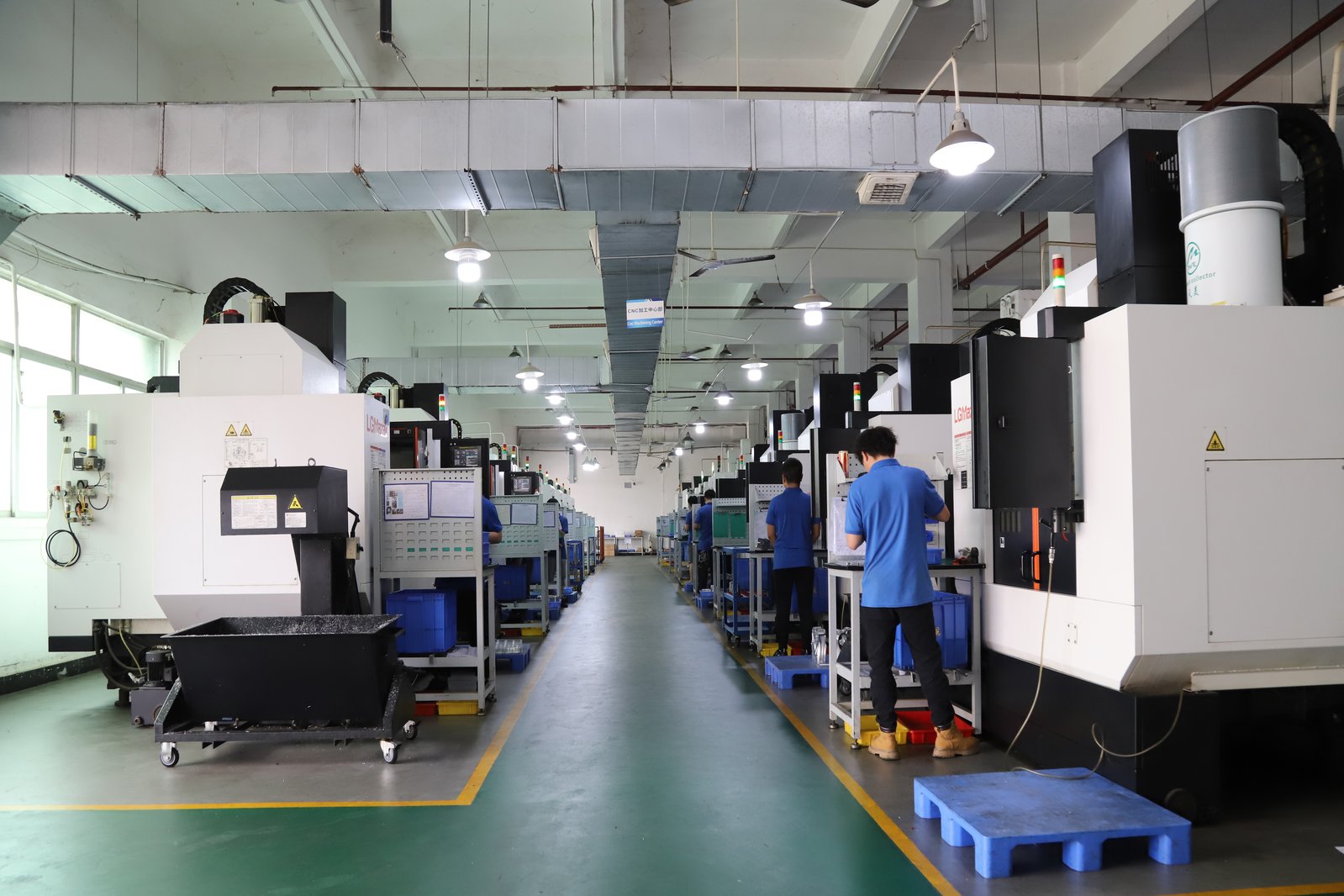
Verification starts before engineering. A custom machined part order placed with a trading desk is a different transaction from one placed with the shop that will actually cut the metal, and the difference shows up first in price and later in accountability. Ask for the legal entity name, its registration or business license number, and the physical address of the workshop, then check those independently instead of taking a website at face value. A manufacturer can arrange a live video walkthrough of the floor and point the camera at the machine types you are about to order — three-axis and five-axis machining centers, turning centers, and the measurement equipment on the inspection bench.
Two more checks belong in this first round. Confirm which company issues the commercial invoice and packing list, because your customs entry and your contract should name the same legal entity — a mismatch is a warning that a middleman sits in the chain. And ask which quality system the shop operates under. On this site, for example, the factory is ISO 9001:2015, IATF 16949:2016 (product design excluded) and ISO 14001:2015 certified, with the systems described on the quality page. The certificate is not a guarantee of your part, but it is a floor: a shop that maintains a certified system also keeps the records that the four verification gates depend on.
What belongs in the drawing package before you request a quote?
Every verification gate downstream depends on the drawing package, so this is where ambiguity is cheapest to remove. Send both a 3D model and a 2D drawing, because each carries information the other does not. The 3D model — STEP or IGES — defines the geometry; the 2D drawing is where tolerances, datums, material grade, surface finish, thread callouts, and general notes actually live. A shop can machine geometry from a model alone, but it cannot verify tolerances that were never stated, so the 2D drawing is not optional when the part has any controlled feature.
On the drawing package, name the material by grade and standard, not by family: 6061-T6 aluminum to the ASTM plate standard, or 17-4PH stainless in a specified condition, rather than "aluminum" or "stainless." State the finish separately from the dimension, because an anodize or plating specification changes both the process and the as-built dimensions. And write the revision letter in the same field on the PO, the drawing title block, and the email subject — revision confusion is the single most common source of dispute on machined parts, and it is entirely avoidable. If you need guidance on what a shop needs, the parts page of this site describes the typical part scope and data flow.
Which material documents should arrive with the metal, not after it?
The material certificate, or mill test certificate, is your proof that the stock machined into your part is the grade you named. It must arrive with the material and be checked before machining starts, because a certificate produced after the parts are cut proves nothing about what was actually cut. Read it the way a quality engineer reads it: the certificate should name the specification and temper from your drawing, carry a heat or lot number, and that heat number should match the marking on the delivered bars or plate. A certificate that describes a generic grade with no heat number is a description, not a certificate.
Ask one more question at the quoting stage: what happens to the certificate when the stock is consumed? If a single bar is cut across several orders, the shop should record which order consumed which heat so your part can be traced back. And state the rule on substitution before you order: a lower-cost "equivalent" grade is not acceptable without your written approval, because on a custom part the grade was chosen for a reason — strength, corrosion resistance, or compatibility with the finish you specified. If the shop will not commit to material verification at receiving, that is a signal about how it will treat every other gate.
What should the first article prove before you approve the production run?
The first article inspection is the buyer's strongest verification tool, and it is strongest when it happens before production, not after. On the first part out of the machine, require a report that records every characteristic on the drawing: each dimension with its tolerance, the measured value, the instrument used, and a conformance decision. Include the material certificate in the same review, because the first article proves the part — geometry and material — before you authorize a run of a hundred or a thousand.
When you review the report, look for the signs of a real measurement rather than a filled-in form. A believable report names the instrument for each feature — a CMM for a tight bore, a height gauge or caliper for an open dimension — and flags non-conforming characteristics for disposition instead of quietly restating the nominal. Decide your tolerance expectation before the report arrives: a shop with a disciplined system will hold milling and turning to ±0.003 mm and precision grinding to ±0.002 mm on controlled features, with process capability Ppk ≥ 1.67 at the initial study on critical characteristics and Cpk ≥ 1.33 on general characteristics. Capability is reported per characteristic: every report names the feature, its tolerance band, the sample size, the sigma method, and the study window. Ask the supplier to send photos of the critical features with the report, and if a dimension is tight enough to matter, request the CMM data for that feature rather than a single number on a form. The services page of this site describes the range of processes and inspection stages a full-service shop applies between first article and shipment.
What belongs on the pre-shipment check before the balance is paid?
Pre-shipment verification is where payment leverage meets physical evidence. Before the balance is released, require three things. First, dated photos of the finished batch: the parts as machined, close-ups of the critical features, and the parts in their packaging. Second, the final inspection report on the production lot, not just the first article — a sample dimension check across the batch, or a full check if the part is tight or the quantity small enough to measure everything. Third, a check of the packing list against the order: quantity, part marking, revision, and the material certificate number for the lot inside the box.
If you cannot visit the shop, decide in advance whether a third-party inspection is worth the fee. For a tight part, a high quantity, or a first order from a new supplier, an independent inspector on the floor before shipment is inexpensive insurance against a full container of scrap arriving at your dock. Name the inspection point in the PO — "balance due upon pre-shipment inspection report and shipping documents" — so the gate is contractual, not a favor you ask for later. And keep one rule in mind: a supplier that hesitates to send dated photos of its own finished work is asking you to pay for trust, and custom part sourcing should run on evidence instead.
How should payment be structured so you keep leverage through every gate?
Payment structure is the mechanism that makes the four gates enforceable, so design it before the PO, not after an argument. The common pattern for custom machined parts in China is a deposit to cover material and booked machine time, with the balance tied to a milestone you can actually see — the first article approval, then the pre-shipment report and the shipping documents. Keep the deposit small enough that walking away is a realistic option, and large enough that the shop has no incentive to cut corners on your material. The exact split depends on the order value and your history with the supplier, but the principle does not change: never structure payment so the full balance is due before you have evidence the parts conform.
Use the payment schedule to enforce timing as well as quality. Tie the deposit to the material order so the clock starts when the metal is actually bought, tie an intermediate payment, if any, to first article approval rather than to a calendar date, and tie the final payment to the pre-shipment check and the shipping documents. Written into the PO, this turns every verification gate from a request into a condition. If a supplier pushes back on a payment structure that protects you against a bad batch, treat that as information about the supplier, because a shop confident in its quality is normally happy to be paid after it proves the parts.
Which red flags should stop an order before you send any money?
Some signals are worth acting on before the first deposit. A supplier that cannot produce its legal entity and registration details, or whose address does not match its claimed workshop, fails the first gate by definition. A quote that is dramatically lower than the others usually means a setup or a finish was omitted from the price, and it will reappear as an extra later. A supplier that refuses to name the material source, will not commit to a certificate at receiving, or says a first article "will not be necessary" for a repeatable part is telling you how it treats verification — believe it. And a supplier that answers technical questions with sales enthusiasm rather than process detail has not earned the order on engineering grounds.
Weight these signals against the price difference honestly. The cheapest quote for a custom machined part is rarely the cheapest total cost, because the buyer pays for verification failures in inspection time, rework, shipping delays, and disputes. Sourcing from China works well when the paperwork is treated as part of the product: a complete drawing package, certified material, an approved first article, and pre-shipment evidence are not bureaucracy — they are the difference between buying a part and buying a promise.
Which questions should you send before placing the order?
If you take one list away from this article, take this one. Send it with the RFQ and keep the answers on file, because they become the baseline for every later check.
- Entity: What is the legal entity name, registration number, and workshop address? Which company will issue the invoice and packing list?
- Drawing: Do you quote from the 3D model, the 2D drawing, or both? Which revision governs if they disagree?
- Material: Will you procure to the grade and standard I name, with the certificate at receiving? May I see the certificate format you issue?
- Tolerances: What tolerance and capability does your process hold, and which instrument will verify my critical features?
- First article: Will you send a first article report with measurements before the production run? How soon after the first part is machined?
- Pre-shipment: What evidence will you provide before shipment — photos, final inspection report, packing list? Is a third-party inspection acceptable?
- Payment: What is the deposit, and what milestone triggers the balance? Can the balance be tied to the pre-shipment report?
- Non-conformance: What happens if the production lot does not match the approved first article — rework, replacement, or refund, and at whose cost?
Answers that name documents, milestones, and dates are the answers you can verify. Answers that stay at the level of "no problem" and "quality is our priority" are not answers to these questions at all. Custom machined part sourcing in China rewards buyers who verify, and the verification starts with the questions you ask before the money moves.
Frequently Asked Questions
What is the minimum I should verify before paying a Chinese CNC shop?
Four gates cover most of the risk: the drawing package and revision you approved, the material certificate tied to the heat actually machined, a first article inspection on the first production part, and pre-shipment evidence — photos, a final inspection report, and a packing list check. Approve each gate in writing before the balance is paid.
Do I need a third-party inspection for parts made in China?
Not for every order. A reviewed first article plus dated photos and a dimensional report before shipment covers many programs. A third-party inspection adds real value when the part is tight, the quantity is high, or the shop is new to you and you cannot visit the floor.
What tolerances can a custom machining shop hold for my parts?
Milling and turning hold ±0.003 mm and precision grinding holds ±0.002 mm, with process capability Ppk ≥ 1.67 at the initial study on critical characteristics and Cpk ≥ 1.33 on general characteristics. Capability is reported per characteristic: every report names the feature, its tolerance band, the sample size, the sigma method, and the study window. Verify the tight features with a CMM report on the first article rather than accepting a blanket capability claim.
How should I structure payment when sourcing from China?
A small deposit to book material and machine time, with the balance tied to milestones you can see — first article approval and the pre-shipment report with shipping documents. Never structure it so the full balance is due before you have evidence the parts conform.
What if the parts arrive and do not match the approved first article?
That depends on the PO. Agree before ordering that production parts will match the approved first article, that deviations require your written approval, and what the remedy is — rework at the supplier's cost, replacement, or refund on rejected units. A PO without that clause is where disputes begin.
How do I know a supplier is a real manufacturer and not a trading desk?
Ask for the legal entity name, registration number, and physical address, then check them independently. A manufacturer can show its workshop and arrange a live video call to the floor. A trading desk that cannot say where the parts are actually made is a risk you should price into the decision.
Should I buy material myself or let the supplier buy it?
Supplier-bought material is the norm when the RFQ names the exact grade and standard and requires the certificate at receiving. Consigning your own material removes substitution risk entirely and is worth considering for expensive alloys or when you already hold approved stock.
Want a supplier that treats verification as part of the part?
Send the drawing package and your verification questions through the contact page — the quotation will come back with the material, inspection, and payment milestones stated in writing.