
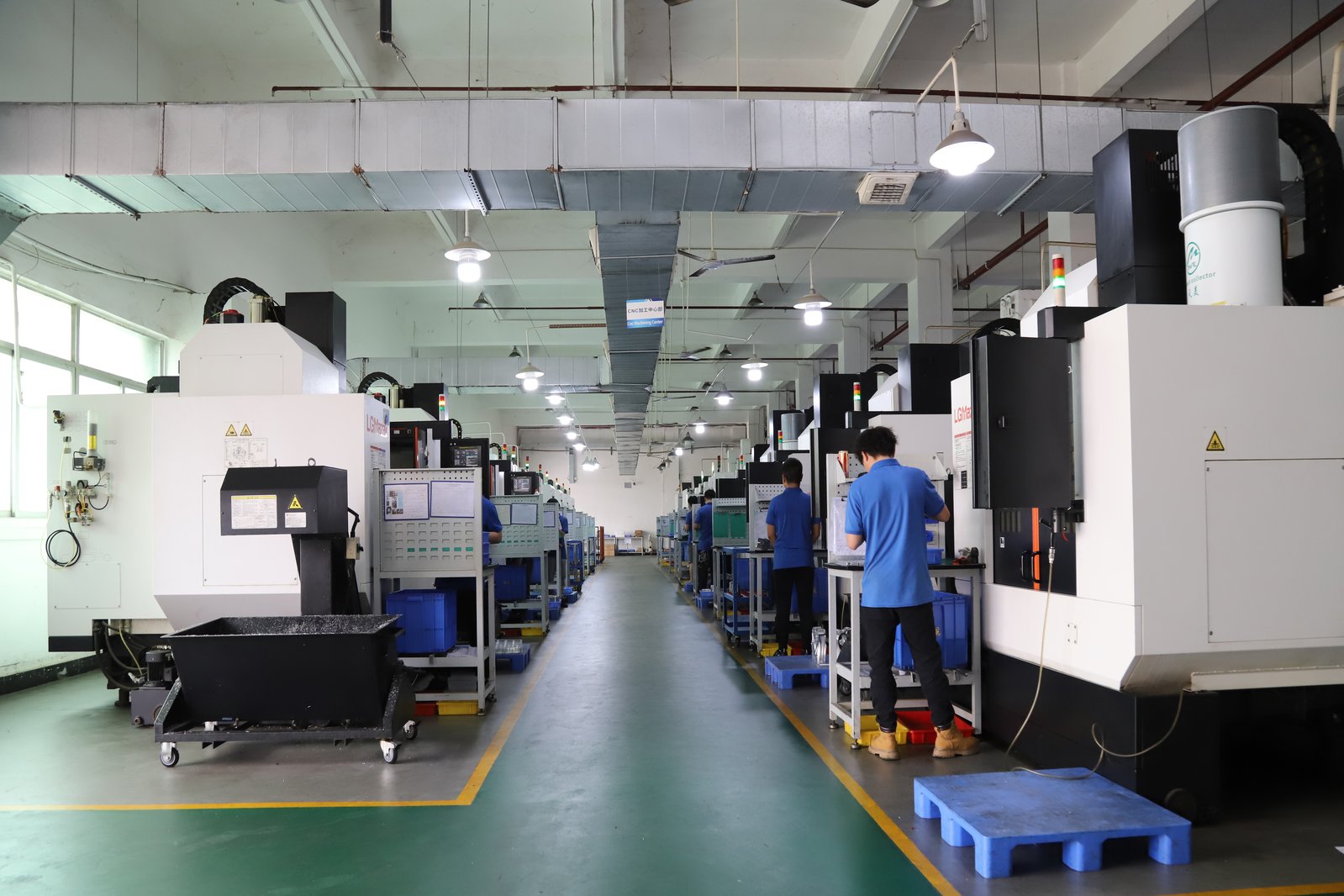
Custom machined parts are quoted in lead-time tiers of roughly 3, 7, or 30 days, and the tier is set by the work, not by a promise. A simple part with few operations runs fast; a complex part with many operations, tight callouts, and finishing runs long; and the quantity, up to a threshold, barely moves the date at all. For a buyer sourcing low-volume custom work, the useful question is not "how fast" but "what owns the schedule", because the answer tells you where the date comes from and where it can be shortened. This guide walks the tiers, the owners, and the ordering practices that keep a custom part schedule honest.
Why is a custom part lead time quoted as a tier rather than a date?
A meaningful date has to be built from the work, and the work is counted at quoting. A three-day part is simple — a few operations in a standard material with no finishing beyond the cut surface. A seven-day part is the typical custom order: more features, more operations, standard inspection, perhaps a light finish. A thirty-day part is the complex route: many operations, surface finishing or heat treatment, tight callouts, and an inspection that takes real time. Each added step is a setup, a run, and an inspection point that a shorter window cannot absorb.
The tiered quote is the honest form of a lead time because it names the workload behind the date. A shop that quotes one flat lead time for every part has not counted the steps; one that quotes a tier with the routing explained has. The DFM review at quoting is where the steps are counted and the tier is set, which is why the review comes before the date. When you ask what moves the part to a faster tier, the answer usually points to a step the drawing does not need, and removing it is the honest way to shorten the schedule.
Complexity, not size, is what drives the tier. A small custom part full of deep pockets, angled features, and tight callouts can carry more machine time and more inspection than a large simple plate, which is why quoting is built on a feature-by-feature routing rather than on the part's envelope. When you send a drawing, the supplier counts the operations — how many setups, which machine classes, which tools, which secondary processes — and that count becomes the tier. Two parts of identical size can land in different tiers on feature count alone, which is why a date quoted from a rough description is worth nothing, while a date quoted from a counted routing is worth planning around. The routing is the schedule's foundation, and the tier is its honest expression.
Which step usually owns the schedule for a custom part?
For most custom parts the machining itself is not the bottleneck — the steps around it are. Material procurement owns the schedule when the stock is special-order or must arrive certified, because machining cannot start until the material is on the floor. Finishing and heat treatment own it when they run at specialist processors with their own queues, because each step means transport, processing, and return for any post-treatment work. Final inspection owns it on complex parts, where the metrology of the key characteristics is real time and a finding sends the part back to the machine.
The buyer's controls follow the owner. For material, ask at quoting whether the stock is in hand and, if not, what the procurement time is. For finishing, ask whether it is in-house or at a processor and what that processor's current lead time is running. For inspection, confirm which features carry measured values and plan the metrology into the schedule. When the supplier names the owner of your date, it is running schedule discipline; a date quoted without an owner has not been counted, and a schedule without a named owner is a schedule that will drift.
How do process steps and material availability drive the date?
Each process step adds setup, run, and inspection time, and the count of steps is the honest driver of the date. A simple custom part runs in a handful of operations; a complex part can carry many more, adding cross-features, secondary processes, and the inspections between them. The table below maps the common characteristics to the tier they usually land in.
| Part characteristic | Typical tier | What owns the schedule |
|---|---|---|
| Simple part, standard material, no finish | About 3 days | A short routing with few operations |
| Moderate features, routine inspection | About 7 days | More operations and setups |
| Many operations, thin walls, tight callouts | Toward 30 days | Sequencing and longer machine time |
| Surface finishing or heat treatment in the route | 30-day tier | Processor queues and post-treatment work |
| Special-order or exotic material | 30 days or longer | Material procurement ahead of machining |
Material availability sits at the front of any schedule, because a custom part cannot start until its stock is on the floor. Standard alloys are in stock at most shops and start the moment the program is approved; a special-order alloy or a non-standard size moves procurement onto the critical path, and the procurement time has to be added in front of the machining tier. Ask at quoting whether the material is in hand — the answer separates a start-now schedule from one that waits on a supplier.
How does the quantity and the routing interact for low-volume work?
For low-volume custom parts, the routing usually owns the schedule more than the count. A single part and a short run of the same geometry share a tier, because the process steps are the same and the extra parts add machine time that a shop schedules in blocks rather than day by day. The quantity only starts to move the date beyond a threshold, where the run occupies a machine for a measurable stretch and has to be planned as a block. That is why a buyer can validate a design on one part and scale to a short run without restarting the lead-time clock from zero.
Beyond the threshold, the release pattern decides the schedule. A release that covers several weeks of consumption runs once, pays the setup once, and carries one lead time, while the same volume split into small releases restarts the setup and the tier on every batch. For a low-volume program in steady demand, consolidate the releases to the quantity your consumption supports, and share the forecast so the shop can plan the machines and the material around the program. A buyer who orders in isolation gets the tail of the queue; one who shares the program's shape gets a schedule built around it. Keep the forecast current, too — a program that updates the shop on volume changes keeps its place in the queue, while one that goes quiet for a quarter and returns with a rush order forfeits the schedule it once held.
What do drawing changes and quality gates do to the schedule?
A custom part schedule is built around a frozen drawing, and every change resets part of the clock. A revision that moves a feature means a program edit, a new first article, and usually a fresh inspection, and depending on where the change lands the part may need to re-enter the queue for the affected operation. Batch your changes into one release, ask what a revision does to the date before you send it, and treat the drawing as a controlled document — the design that stops changing is the fastest design there is.
Quality gates sit inside the schedule and are worth planning around. The first-article inspection on a new part, the CMM run on the key characteristics, and the material certificate check are the steps that keep a fast part from becoming a rejected one. Ask when the first article will be measured and reported, that date is the real proof point of the schedule. A shop that schedules the quality gates as part of the routing is running a schedule you can trust; one that treats inspection as spare time is promising dates it cannot hold.
Logistics deserve their own line in the schedule, because the tier is a machining number and the delivery is a door-to-door number. International courier transit for a custom part typically adds days to the tier, sea freight for volume adds weeks, and customs clearance and the buyer's own receiving inspection sit between the courier's delivery and the parts being usable. Confirm the shipping method, the transit time, and the Incoterm when the order is placed rather than when it is late, and add the freight to the machining tier when you plan the delivery date. A program that plans the tier plus the freight plus the receiving check is one whose launch date holds; one that plans to the machining date alone discovers the gap when the parts arrive after the line needed them.
How do you compress a custom part lead time without hurting quality?
Compression comes from removing steps and planning the ones that remain. Run the DFM review with the schedule in view — every operation that a small design change eliminates is schedule recovered, and the features that fight the process are the ones the review should flag. Approve the material and the finish at quoting so no decision waits on a later email, confirm the documentation list so the report is produced to your template on the first pass, and tell the shop which date matters so it can plan the capacity and the sequence around it.
Then use the machine depth deliberately. A part that can run on more than one machine class should be scheduled across the floor rather than queued on one spindle, and a short production run should be planned in steps the capacity absorbs. When a date is truly critical, say so early and ask what the fastest honest route is, not a rush on the current process, but a routing that reaches the same result in fewer steps. The compression that happens at quoting is the only kind that is free, and the capacity that backs the date is the only kind that holds.
How do you plan a custom part program from prototype to repeat?
Lead time has to be planned at every stage of a program. Prototype on a single part while the design is unproven, because a design error costs one part and the first article sets the process. Move to a short validation batch once the drawing is stable, and use its report to lock the routing, the documentation format, and the measured baseline. Then scale at the quantity your demand supports, with the first-article package as the baseline every repeat lot is measured against.
Plan backward from the need date at every stage: the machining tier, plus freight, plus receiving inspection, plus the buffer. Work the calendar back from the assembly or launch date and the placement date appears, and it exposes the schedule discipline most programs learn the hard way, which is that the part was never the bottleneck; the decisions around it were. The services page on this site explains how custom machining, finishing, and inspection are combined into a route, and the traceability FAQ covers how the record behind the schedule is produced and what it contains.
One schedule decision compounds across a program: the release cadence. A program that orders the prototype, then a validation batch, then repeat volume in separate releases pays the setup and the lead-time tier on every stage; one that sequences the releases so the validation batch follows the approved first article and volume follows the validated report pays each setup once and lets each stage's output feed the next decision. On a custom part program the cadence is where lead time and cost meet, and planning it deliberately is what turns a series of one-off orders into a repeatable schedule with dates you can actually manage.
Frequently Asked Questions
What is a realistic lead time for a custom machined part from China?
Roughly 3, 7, or 30 days, set by part complexity and process steps. Simple parts run about 3 days, standard parts about 7, and complex parts about 30. The tier follows the routing, so a single flat date for every part is usually a guess.
Which step usually owns my custom part's schedule?
Ask which operation is on the critical path. It is usually material procurement when the stock is special-order, a finishing or heat-treatment step with its own queue, or final inspection on a complex part. The machining itself is rarely the bottleneck.
Does a small order take the same time as a bigger one?
Often, yes — the tier is set by the process steps, so a single part and a short run of the same geometry share a tier. Beyond a threshold the quantity does move the date, but for low-volume work the routing usually owns the schedule more than the count.
How do I get a shorter lead time without hurting quality?
Compress the schedule by removing steps, not rushing them. A design that machines in fewer operations ships faster; material in stock starts sooner. Tell the shop which date matters and approve the decisions at quoting so none waits on a later email.
How much buffer should I add beyond the quoted tier?
Add the freight transit to the machining tier for the delivery date, then a short buffer for the assumptions that can slip. The tier is machining days, not door-to-door days. A buffer absorbs the first slip without turning it into a crisis.
What do drawing revisions do to the schedule?
Every revision means a program edit, a new first article, and usually a fresh inspection, and it can push the part back in the schedule. Batch your changes into one release. The design that stops changing is the fastest design there is.
What should I send to get a fast, accurate date?
The complete package in one message — the drawing at a final revision, the material with its condition, the tolerance and finish callouts, the quantity, and the target date. The fewer questions the shop must ask, the sooner the tier is set. Completeness is the cheapest expedite.
Have a custom part you want a date for — with the schedule explained?
Email [email protected] or call +86 13126536955 and ask for the tier, the routing behind it, and what would move your part to a faster one.